
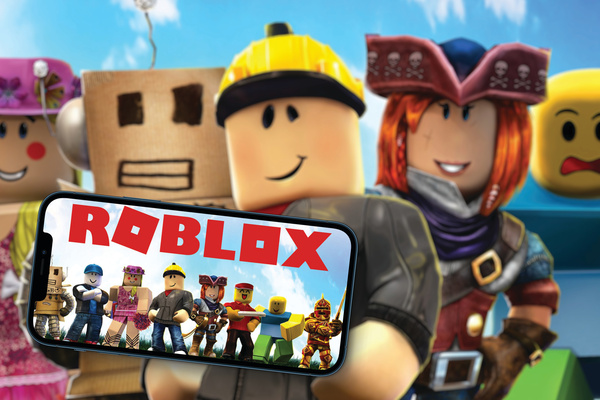
Roblox represents a massive evolution beyond standard digital playgrounds; it serves as a decentralized infrastructure where millions of global minds deploy real-time servers, script deep multiplayer mechanics, and capture mass audience attention loops every single day.
Unlike restricted traditional title engines, the platform leaves the steering wheel entirely in your hands: you can navigate the landscape as a high-tier participant optimization engine or scale assets as a startup studio architect developing worlds that command permanent community followings.
Backed by an accessible runtime ecosystem and hyper-connected viral feedback loops, the framework serves as the ideal intersection where interactive design connects with monetization scalability. You can compile your own custom logic, engineer premium avatar asset lines, host corporate metaverse activations, and convert Robux—the native digital layer—into actual legal tender.
Whether your roadmap focuses on clocking up entertainment session lengths or launching a highly profitable software brand within the gaming sector, Roblox is your technical gateway to infinite digital distribution. Ready to discover how to fully maximize this system and shatter the discovery algorithm? Read on to modify your operational baseline!
The Architectural Shift: The YouTube of Interactive Media
Standard video games lock users behind pre-rendered geometry and linear scripts. Roblox breaks this model entirely by acting as an open-access experience container and distribution hub—the ultimate industry separator. Initially shipped to the market back in 2006 by founders David Baszucki and Erik Cassel, the structural environment was optimized to exist as a collaborative, cloud-native meta-network.
The updated baseline numbers validate this macro trend: more than 70 million daily active profiles are continuously processing events inside the ecosystem, cutting across global age demographics across more than 180 international borders.
This massive scale is just the foundational layer. Instead of consuming a single static piece of intellectual property, you can instantly query millions of standalone applications, curated and deployed by users executing logic exactly like you.
It operates precisely like a "Decentralized Video Engine for Games": individual developers build and ship their unique projects directly to the cloud, allowing the immediate community to connect, interact, and monetize. The output is a non-stop, algorithmic flow of mechanics, emergent design, and persistent challenges.
Design & Deployment

The Metaverse Ecosystem
Deconstructing the Stack: Mastering the Three Core Layers
The platform runs as a live, data-driven ecosystem. Deconstructing the technical logic behind the UI layer is critical if you want to capture real traction. The whole macro environment is balanced on three foundational pillars: asset creation, networked communities, and transactional velocity.
1. The Advanced Development Engine
The operational hub of the ecosystem is Roblox Studio, the integrated free developer suite engineered to build 3D assets and manage networked world-states.
- Zero Upfront Barriers: Completely free to download, optimized to accommodate both entry-level visual logic scripts and complex back-end architectures.
- Total Scope Scalability: Provides the tools to deploy everything from fast, session-based minigame modules to dense, multi-region open world MMOs.
- The Lua Runtime Environment: Powered by an agile, high-performance scripting language, making it straightforward to code custom remote events and tailored physics loops without performance degradation.
In practice, one development team can optimize high-speed physics calculations for a racing simulator while another designs an asynchronous server system for a simulation economy—and both can capture mass marketplace interest simultaneously.
2. Amplified Network Effects
The real scale of the ecosystem stems from the continuous human data layers processing within the platform nodes.
- Clans & Dev Hubs: Consolidate highly targeted, high-retention player groups around specific mechanical niches and common game aesthetics.
- Hackathons & Agile Sprints: Continuous collaborative jams, feature sprints, and version drops keep retention metrics high and server nodes active.
- Native Communications Routing: Built-in instant messaging protocols, friend invites, and persistent party systems organically compound user acquisition for active applications.
3. The Global Virtual Economy
The entire economic infrastructure relies on the continuous velocity of its digital asset token, Robux.
- Studio teams generate high-margin cash flow by deploying developer products, customizable gamepasses, and high-tier functional upgrades inside their maps.
- Active end-consumers swap tokens to display exclusive user-generated clothing assets or to access premium stat boosts within competitive rounds.
- Leveraging the official Developer Exchange (DevEx) pipeline, successful creator operations can cash out virtual capital into fiat currency, establishing scalable software businesses.
Professional Framework: Bridging this structural triad—shipping high-performance experiences, managing audience retention loops, and deploying conversion-optimized monetization—is the definitive method to scale the discovery charts.
The Algorithmic Engine Behind Global Scale
This platform didn't scale to a macro market position purely via basic visual appeal. The underlying product architecture is highly deliberate.
1. Infinite Content Variation
Forget the traditional single-player campaign model. The environment functions as a dynamic, real-time repository of millions of modular applications, receiving non-stop repository pushes daily. User churn is structurally minimized.
2. Dynamic Sandbox Control
Unlike rigid, pre-designed linear software, here you are the primary engineer of the runtime experience. Want to script an asset world where gravities fluctuate based on timer events? The workspace allows it. Prefer to optimize a complex virtual business model? The runtime parameters are open.
3. Unified Cross-Platform Architecture
Whether processing input data from a high-end PC, a low-spec mobile phone, tablet hardware, console systems, or VR equipment, the ecosystem resolves everything onto a single engine layer. This eliminates device friction and unites global users instantly.
4. Integrated Social Graph
Environments optimized for group voice chats, real-time cooperative logic, and guild mechanics build long-term retention. Millions of profiles log into the app infrastructure not merely to process basic objectives, but to engage their real social layer inside the metaverse.
5. High-Upside Entrepreneurial Pipelines
The direct mechanism to transfer digital credits into real-world banking deposits attracts world-class engineering teams. This loop self-corrects and improves: better studio talent builds high-performance experiences, which scale concurrent users, driving up economic volume and attracting further venture-scale developers.
Playbooks for Dominating the Platform Workspace
It's time to optimize your technical output. Implement these precise tactical matrices to secure real market share in this massive system.
The High-Tier Player Matrix
- Audit the Telemetry Trends – Monitor the platform's discovery matrices and jump into emerging prototypes right at deployment, capturing high value while server competition is low.
- Optimize Specific Game System Loops – Focus on deep mastery of specific game architectures. Understanding variable script states and environmental shortcuts places you in the top tier.
- Maximize Rare Badges & Metadata – Focus heavily on extracting hard-to-reach digital assets, trophies, and milestones. They form your technical validation portfolio inside the meta-network.
- Scale Your In-Game Social Profile – Maintaining elite performance and positive network behavior positions you for elite clan invites, unlocking locked high-level regional nodes.
The Strategic Studio Architecture
- Perform Rigorous Market Testing – Evaluate what active demographics are spending tokens on, pinpoint open gameplay genres, and deploy innovative minimum viable products.
- Prioritize System Mechanics Over Visual Flourishes – Complex models draw attention on the initial load, but an addictive, highly-optimized game design loop is what retains users over 30 days.
- Run Aggressive User Acquisition – Leverage high-velocity short-form media channels, developer forums, and user groups to scale organic pre-launch registrations before shipping your code.
- Maintain an Agile Version Strategy – Push regular content updates, track patch reports, and squash game-breaking runtime errors to protect your daily active metrics and community sentiment.
Universal Rule: Never build your software in an isolation chamber. Integrating community feature feature requests is the fastest conversion mechanism to transition a casual project into a top-earning engine.
Critical Operational Fails That Will Sink Your Project Metrics
Within this highly competitive software landscape, a few structural errors can completely kill your server traffic. Mitigate these vectors:
- Deploying Without Validated Data – Launching build files to production without an audience profile, a calculated retention plan, or verified target demographics.
- Ignoring Your Active Telemetry Logs – Tuning out community bug reports and failing to patch structural errors that degrade the core player session length.
- Zero-Innovation Asset Reskinning – Reviewing successful apps for inspiration is valid, but deploying blatant functional clones will completely destroy your studio's brand equity.
- Violating Platform Compliance Frameworks – Utilizing malicious logic scripts, deceptive store architectures, or breaking the corporate Terms of Service will trigger an absolute device ban and remove your assets from the cloud.
By routing around these development traps, you instantly position your studio miles ahead of standard hobbyist attempts.
The Macro Engineering Roadmap of the Metaverse
If you assume the architecture has reached its ultimate iteration, analyze their upcoming platform investment targets:
- Immersive VR Hardware Integrations – Minimizing runtime tracking lag to deliver deep spatial integration and true first-person presence models.
- Generative AI Scripting Systems – Shipping native code-generation tools to drastically reduce the development cycle for structural modeling, script compilation, and behavior assets.
- Advanced Marketplace Commerce Layouts – Unveiling new direct-to-developer monetization rails to optimize developer payouts and create unique subscription configurations.
All core market data indicates the platform is locking down its top-tier position across digital media while simultaneously expanding into educational technology stacks, serving as a powerful deployment node for teaching advanced logic and structural systems to future computer scientists.
Final Execution: The System is Yours to Code
Roblox has fundamentally dismantled the old boundaries of interactive entertainment. It is no longer just a gaming sandbox; it is a live, global web of development talent, user-generated commerce, and real software enterprises. Whether you act as the system architect shipping scalable virtual economies or the power user dominating competitive leaderboards, the platform gives you the entire engine infrastructure to monetize your cognitive surplus and display your technical identity.
The optimal time to download the developer tools and begin prototyping your digital product is right now.
And if you also want to optimize your leisure hours with captivating premium entertainment media beyond interactive software, we have a highly specific lifestyle recommendation: an entire ecosystem optimized for cinematic storytelling, international cinema, and multi-season narratives.
In our next structural analysis, we will map out the digital layout of Viki, the streaming powerhouse controlling the international video sector. Stay locked in to discover how to navigate this premium content platform and integrate its narratives into your digital downtime!